已添加
登录/注册
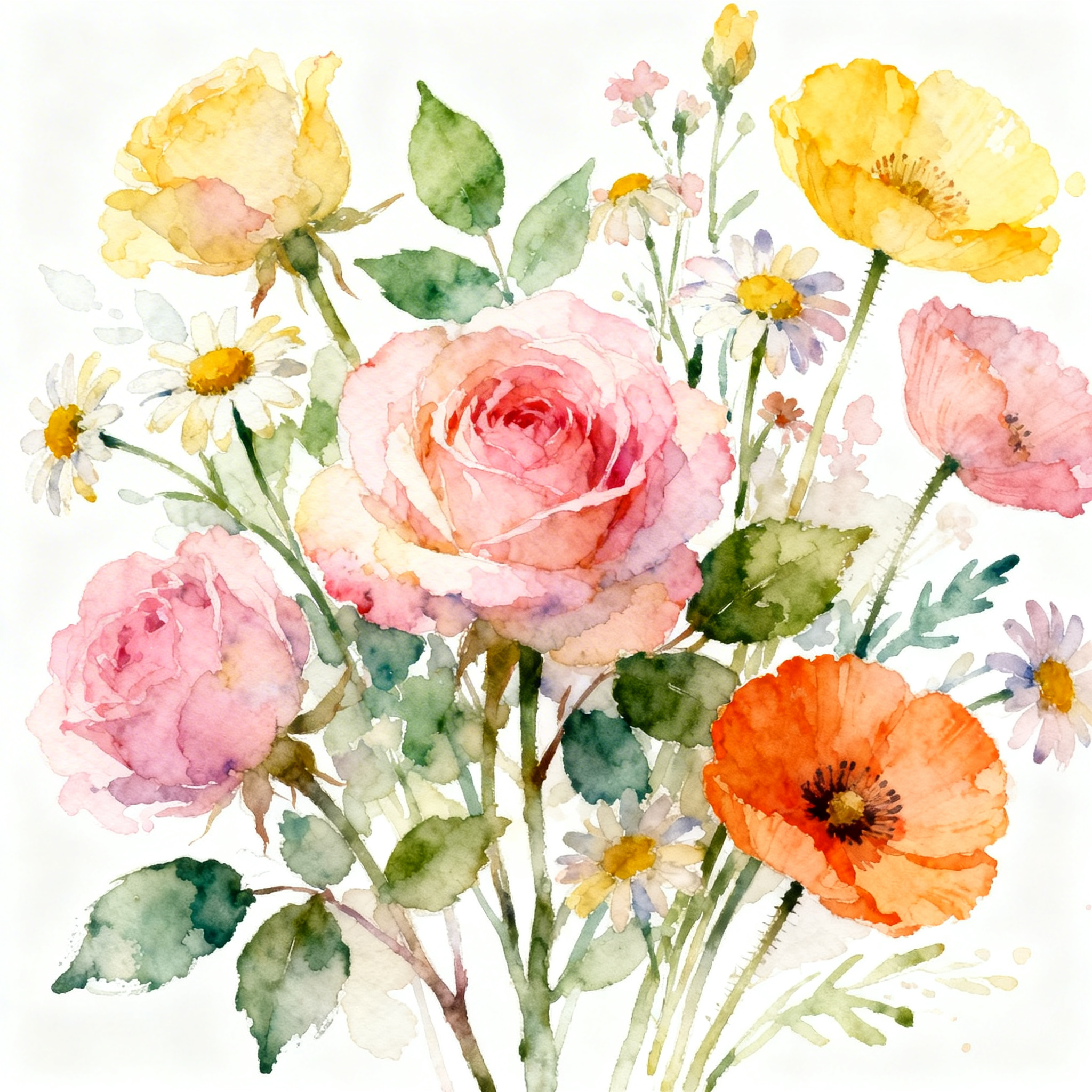
水彩风格的花朵插画,色彩柔和通透,有水彩晕染的自然纹理,包含玫…
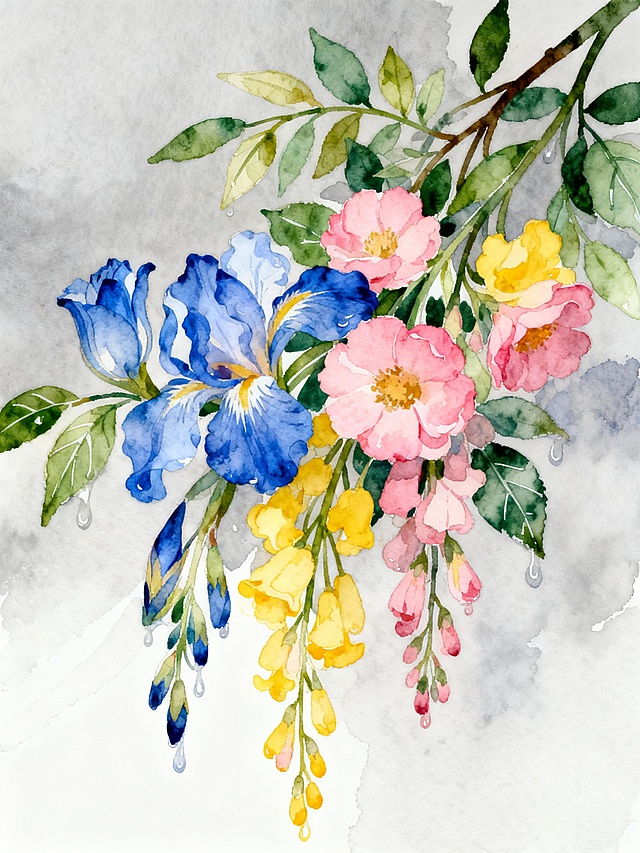
水彩风插画,柔和色彩交织,玫瑰与虞美人绽放,清新浪漫,文艺气息扑面而来,如春日晨光般温暖治愈。
GD452943760
2026.03.21
做同款
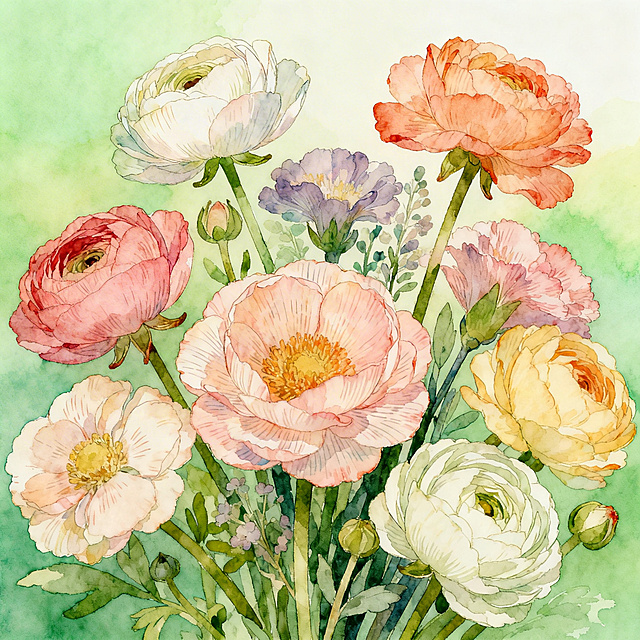
清新治愈风格的花卉插画,画面中有多种盛开的鲜花,色彩柔和丰富,花瓣纹理细腻,背景是淡绿色渐变,整体氛围温馨自然
郑钧兮
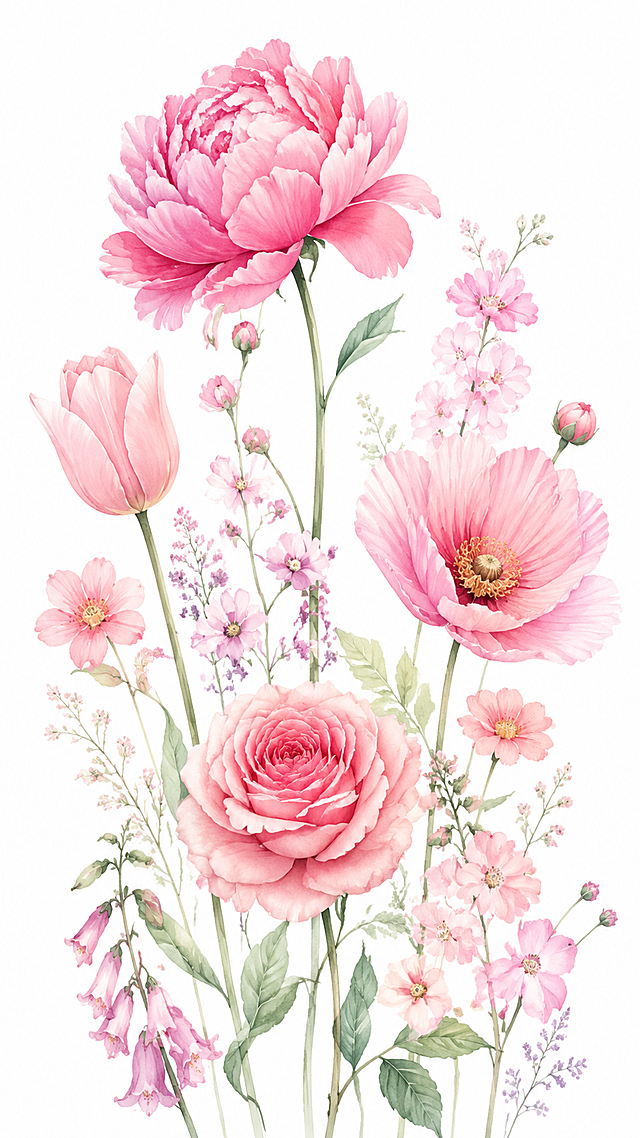
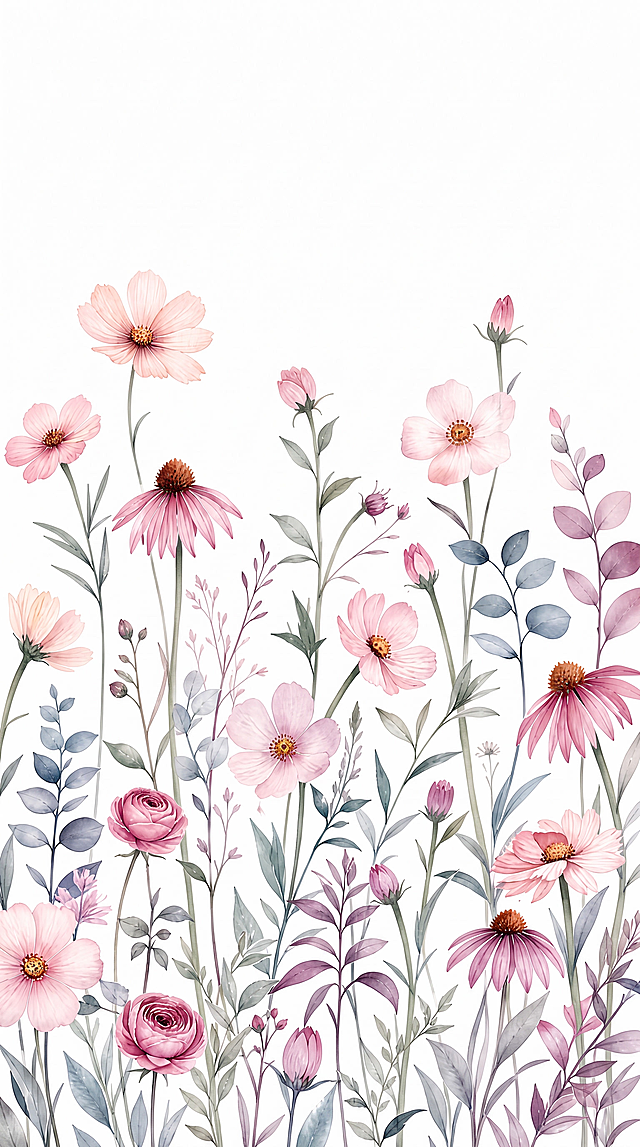
竖幅构图水彩插画风格花卉图,纯白色背景,多种粉红色系花朵向上生长,花类丰富有主次关系,花朵不密集留有呼吸感,花瓣清晰细致纹理分明,颜色清新协调柔和,简约美丽,花朵清晰完整不断裂,大画幅高清精致,水彩手绘质感,画面干净优雅
GD519248614
背景插画也要
GO0KI4eU
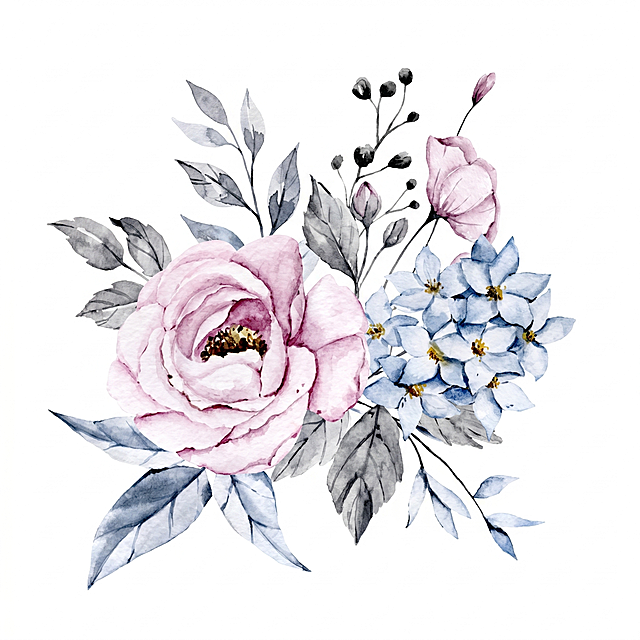
参考上传图片的水彩花卉手绘风格,重新生成一幅同风格的花卉组合插画,画面包含柔和的粉紫色玫瑰、淡蓝色小花、灰调枝叶与花苞元素,保持水彩通透晕染的手绘质感,整体色调清新雅致,背景为纯白色
张利雪
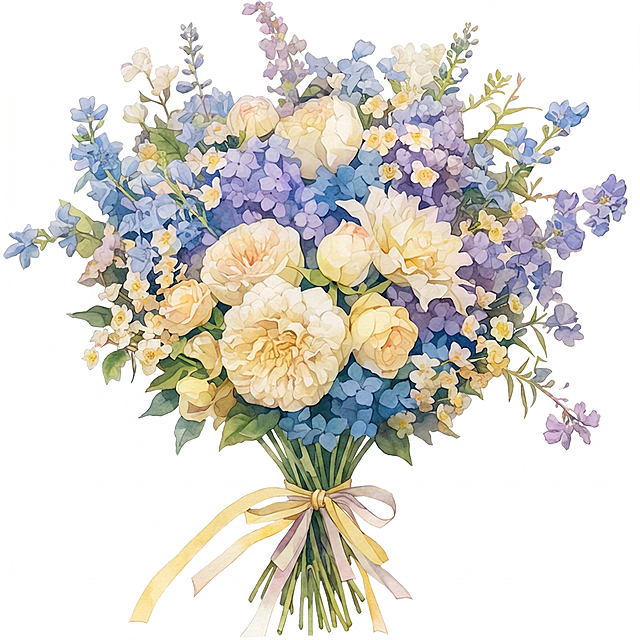
参考图中的水彩手绘花卉插画风格,重新生成全新的花束画面内容。保持温暖的橙粉色调、水彩质感、透明感笔触、自然的植物叶片搭配,花朵形态和组合布局完全重新设计,白色背景,清新治愈的装饰插画风格
xge0vVBf
参考原图的竖幅构图,重新设计插画风格花卉图,多株清晰的大花朵,呈现向上生长的姿态,花朵整体为粉红色,花瓣清晰细致,颜色搭配清新协调,保留纯白色背景,水彩插画风格,画面干净雅致
GD519248614
包装纸去掉蝴蝶结留下
Jason-nasin
去掉水印,做3张类似的图案,这3张要完全不一样的,不要扁平风格
张小艾
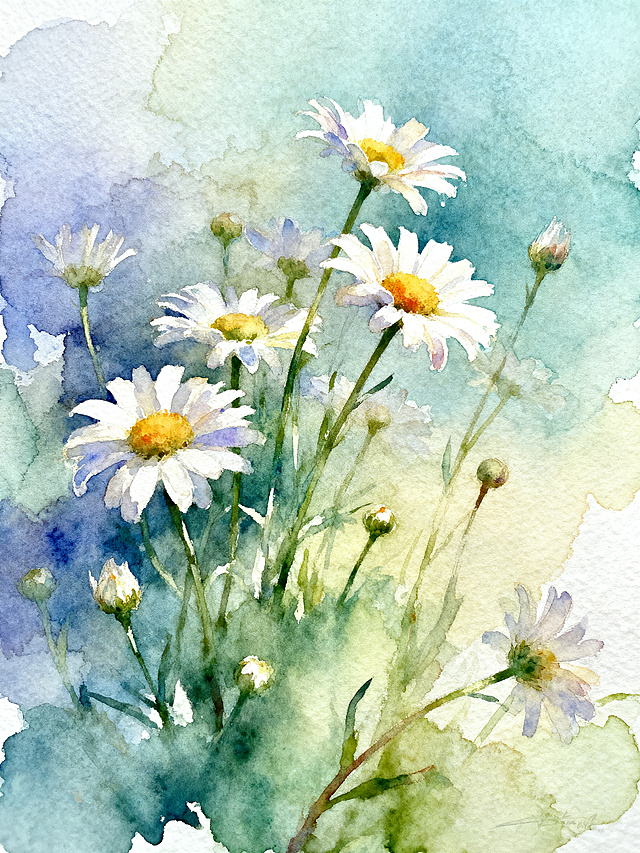
水彩画风格,清新通透的水彩晕染效果,柔和过渡色彩,自然水痕纹理,清新花卉风景场景,轻盈写意充满艺术感
1qx71mrj6e6QzkUA-HB
修改图片颜色,将图片中的蓝色花朵变成粉红色,白色花朵变成浅肉粉色,保留原有的水彩花卉构图和绿叶枝叶不变
用户7IJBJXNs
参考图中的水彩手绘风格,重新生成底部横向排列的粉色系花卉边框,包含玫瑰、百合、郁金香、小雏菊等多种粉色花朵,搭配嫩绿叶片,白色背景,画面上方留白,柔和清新的水彩质感,色彩通透自然,花瓣层次细腻,整体温馨浪漫
好柿❀
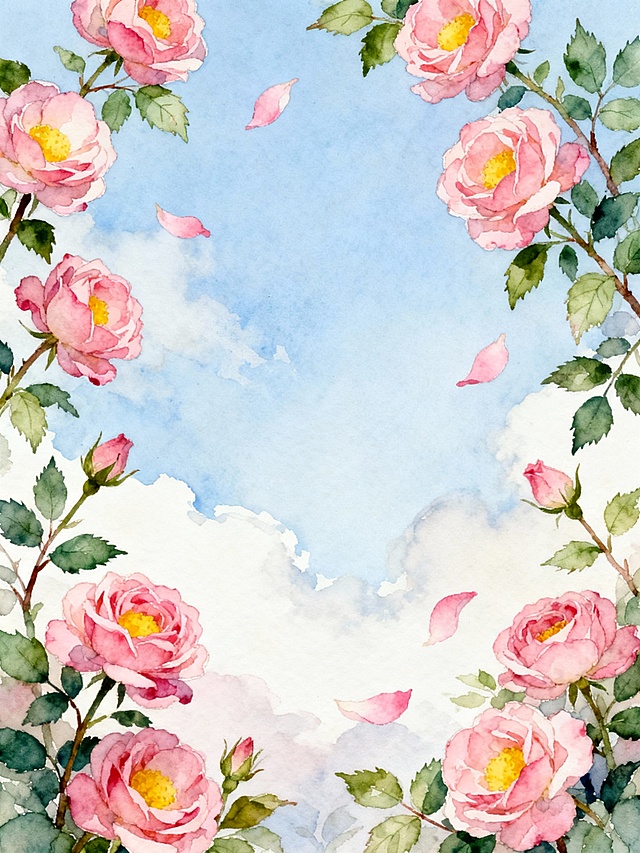
一幅柔和唯美的花卉插画,以淡雅的浅蓝色天空为背景,天空中点缀着几缕朦胧的白色云彩,营造出宁静而浪漫的氛围。画面四周被盛开的粉色玫瑰花环绕,花朵形态饱满,花瓣层次丰富,边缘带有柔和的渐变粉色,花心为明亮的黄色。玫瑰花的枝干上长着翠绿的叶子,叶片脉络清晰,边缘有自然的锯齿状。几朵粉色的玫瑰花瓣正缓缓飘落,增添了画面的动感与诗意。整体风格为水彩画质感,笔触细腻柔和,色彩过渡自然,色调清新雅致,构图呈现对称的边框式布局,中心留白,给人以舒适的视觉享受和温柔的情感共鸣。
1qax10b1q91bck5vv-HB
再做3张,不要有版权的图案
张小艾
把图中包装上的插画转换为平面图
GO0KI4eU
保持原图的花卉构图、植物种类、布局和莫兰迪粉紫配色完全不变,去除色彩的块面感和断断续续的毛刺感,让整体色彩过渡更加柔和自然、平滑细腻,水彩晕染效果均匀流畅,边缘柔和干净,没有颗粒感和色块断层,质感细腻温润,高级水彩手绘风格,白色背景
sterious
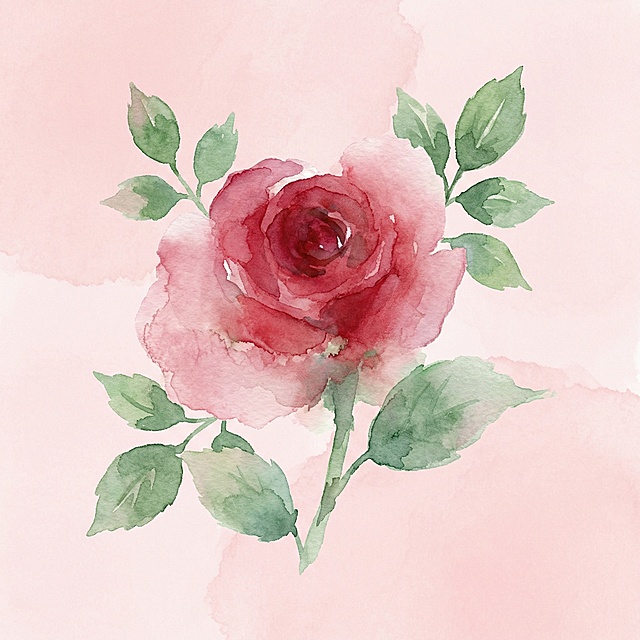
按照这种水彩风格,画一朵玫瑰
HfWDRuye
图片改白底
林琳008
加粗枝干5%,使之流畅整体,其他不做改变
sterious
水彩风格花卉插画,融合现代感与自然之美,柔和色系呈现春日气息,适合节日装饰。
GD1116795051
9:16 vertical standalone watercolor botanical illustration, an elegant natural wildflower meadow growing upward from the entire bottom edge, isolated on a clean pure white background. Keep the upper 30% of the canvas completely empty and white. Arrange approximately 18–22 independent slender stems irregularly across the full width. The lower section is rich and layered, the middle section is airy, and the plants gradually become sparse toward the top. The tallest stems reach approximately 70% of the canvas height. No tied bouquet, no central cluster, no flowerpot and no visible ground line. Use only botanically recognizable real flowers: pale blush Shirley poppies (Papaver rhoeas), with four thin papery petals, open golden stamens and realistic nodding buds; soft pink cosmos (Cosmos bipinnatus), with 8 broad evenly spaced petals and small dark burgundy-and-gold centers; muted dusty-rose purple coneflowers (Echinacea purpurea), with narrow naturally drooping petals and raised brown cone-shaped centers; restrained mauve and dusty-coral zinnias (Zinnia elegans), with clearly structured concentric petals, visible centers and no excessive petal stacking; slender English lavender spikes (Lavandula angustifolia), with small realistic purple florets arranged along upright stems; airy purple lace flower umbels (Daucus carota 'Dara'), with fine branching stems and small burgundy-mauve florets; a few delicate pink waxflower sprigs (Chamelaucium uncinatum); sparse blue-gray eucalyptus branches with naturally paired rounded leaves. Every flower must match its real botanical prototype. Preserve the correct petal count, flower-center structure, bud shape, leaf type, stem proportions and natural growth direction of each species. Do not combine the flower head of one species with the leaves or buds of another. Flowers should have believable front-facing, three-quarter and gentle side-facing angles, with no distorted or invented forms. Maintain one cohesive low-saturation palette throughout the artwork: shell pink, dusty blush, antique rose, muted coral, soft mauve, smoky lavender and restrained plum accents, balanced with blue-gray eucalyptus, sage green and desaturated gray-green foliage. Avoid isolated bright colors. Use warm muted yellow only in a few small flower centers. All colors should feel softened by the same cool gray undertone and belong to one coordinated collection. Delicate transparent watercolor painting, thin layered washes, soft natural pigment transitions, subtle paperless watercolor texture, clean defined botanical silhouettes, continuous slender stems, refined leaf edges and restrained detail. Elegant contemporary European botanical illustration, fresh and commercially appealing, feminine but not old-fashioned, suitable for a premium phone-case surface design. High resolution, clean separation from the white background, easy to extract.
sterious
将花朵整体颜色调整为暗红色调,保持水彩插画风格,大幅提升花朵的清晰度和细节,花瓣纹理清晰细致,花蕊细节丰富,整体画面高清晰锐利,保留纯白色背景和竖幅向上生长的构图
GD519248614
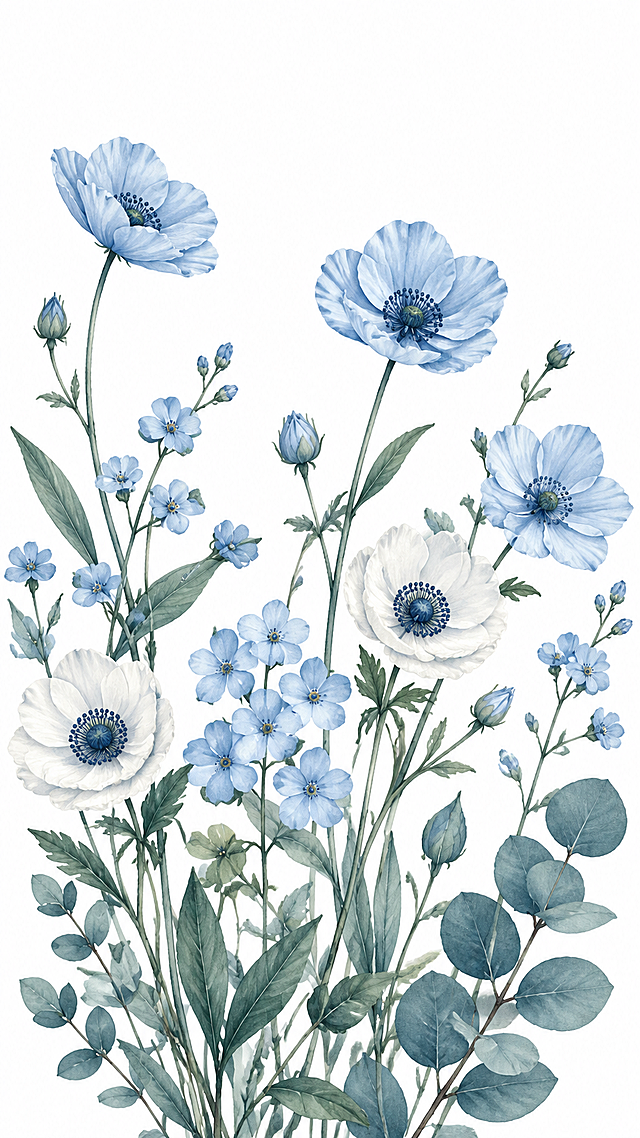
9:16 vertical standalone botanical watercolor illustration, a graceful blue-green wildflower arrangement growing upward from the entire bottom edge, isolated on a perfectly pure white background. Keep the upper 25-28% of the canvas completely empty and white. Arrange approximately 13-16 independent stems across the lower three-quarters of the composition. The stems cross and overlap naturally near the bottom, then spread into separate directions toward the middle and top. Create an airy asymmetrical rhythm with clear height differences and irregular open gaps. Place two isolated tall flowers near the upper left and upper center-right, several medium-height flowers on both sides, and richer foliage near the bottom. Avoid uniform spacing, a triangular bouquet silhouette or an orderly staircase. Use realistic, recognizable flower structures: three large pale-blue single cup-shaped flowers with five broad, gently overlapping petals, including one high side-facing blossom, one large three-quarter-view blossom near the upper center-right and one outward-facing blossom on the right; two large ivory-white single anemones with five or six softly crinkled petals and refined deep blue stamens, positioned at different heights on the lower left and middle right; one compact group of six to eight medium-sized pale-blue five-petal blossoms near the lower center, clearly separated rather than forming a dense dotted ball; two slender branches carrying a few small blue five-petal flowers, with visible individual petals and generous spacing; three to five realistic closed or half-open buds in different sizes and orientations. Vary every flower through size, openness, direction and viewing angle. Petals should retain believable botanical construction and must not look like repeated copies. Combine several clean foliage shapes: long lance-shaped leaves, narrow gently curved leaves, a small branch of oval leaves and one prominent eucalyptus-like branch with large rounded blue-green leaves on the lower right. Leaves vary naturally in size and direction, with complete smooth edges and restrained overlap. Do not add finely divided, feathery or radiating foliage. Stems are slender, continuous and muted dark teal-green. Most grow upward with a slight irregular lean; a few bend gently beneath the weight of the flowers. Keep the curves broad and subtle, without rigid parallel lines, exaggerated S-curves or decorative spirals. Use a low-saturation cool watercolor palette: powder blue, misty sky blue, dusty teal, pale aqua, celadon, gray sage, muted blue-green, soft ivory and small deep petrol-blue accents. The upper flowers are slightly brighter blue, while the lower foliage includes deeper teal and blue-gray tones. White flowers contain faint cool-blue shadows so their petals remain visible against the white background. Use tiny dark blue stamens as controlled focal details. Clean and refined botanical watercolor painting, translucent layered washes, smooth soft color gradients, delicate dry-brush texture on petal edges, no harsh outlines, soft natural lighting from upper left, subtle paper texture, museum-quality botanical illustration, ultra-detailed, 4K fine art quality
sterious
加粗枝干5%,使之流畅整体,其他不做改变
sterious
提高10%的饱和度,保持整体色彩过渡柔和
sterious
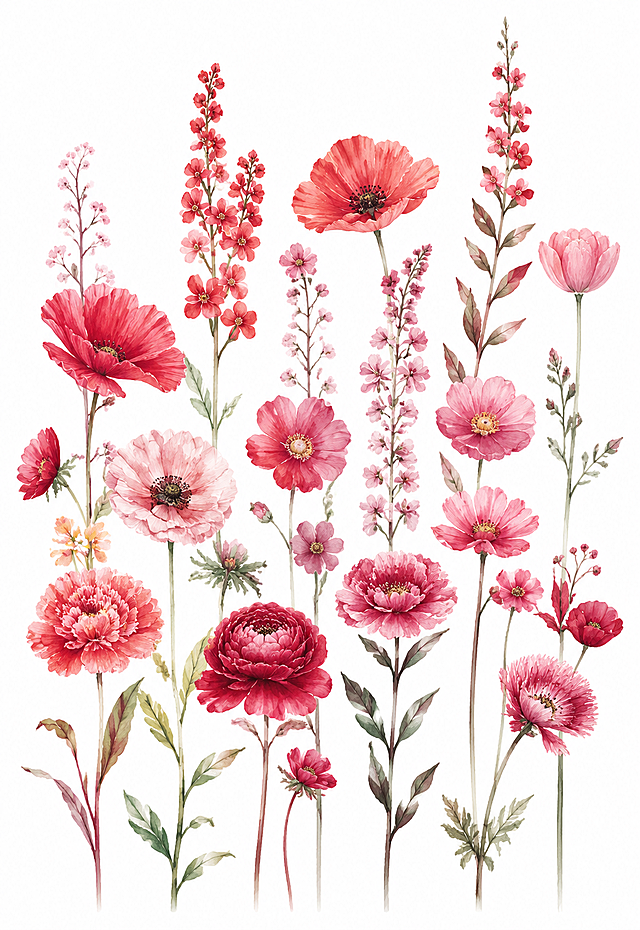
参考原图的竖幅构图,重新设计插画风格花卉图,多株清晰的大花朵向上生长的姿态,花朵整体为红色系列,包含深红、玫红、粉红、浅红等层次,花瓣清晰细致,纹理精致,颜色搭配清新协调,保留纯白色背景,水彩插画风格,画面干净唯美,花朵形态优美好看
GD519248614