已添加
登录/注册
把上图中的机器人图标换成人形机器人,把文字“理论支撑”换成文字…
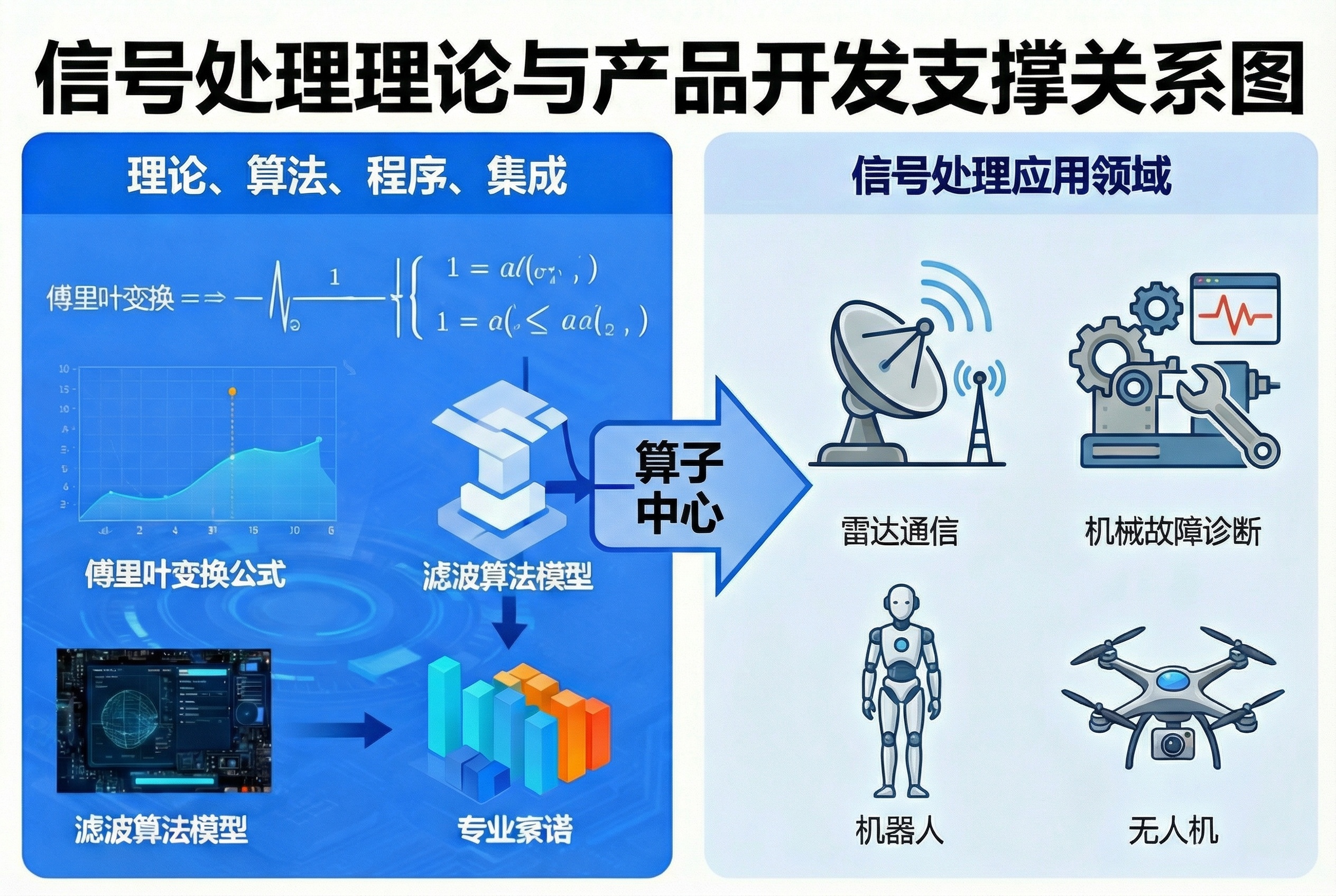
把上图中的机器人图标换成人形机器人,把文字“理论支撑”换成文字“算子中心”。把文字“信号处理基础理论”换成文字“理论、算法、程序、集成”
1qqpkh4ny7x...
2026.05.25
做同款
保留上图的左边部分,即信号处理基础理论部分。把上右边部分图标换成雷达通信、机械故障诊断、机器人、无人机
1qqpkh4ny7xjpYXQ-HB
生成一张图,说明信号处理基础理论对信号处理产品开发的重要性
1qqpkh4ny7xjpYXQ-HB
把上面的的文字“信号处理理论与产品开发支撑关系图”换成文字“算子中心支撑鸿创未来项目与产品”
1qqpkh4ny7xjpYXQ-HB
把左边子图第一次出现的文字“鸿创滤波算法”换成“鸿创双谱分析”
1qqpkh4ny7xjpYXQ-HB
把上图左边子图中文字“傅里叶变换公式”换成文字“鸿创傅里叶快速算法”,把文字“滤波算法”换成文字“鸿创滤波算法”。把左边子图的右下角文字“专业XX”换成“鸿创性能”
1qqpkh4ny7xjpYXQ-HB
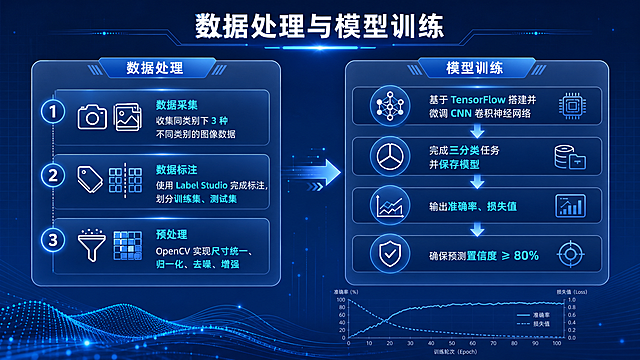
数据处理与模型训练PPT页面,标题“数据处理与模型训练”,数据处理部分:数据采集收集同类别下3种不同类别的图像数据,数据标注使用Label Studio完成标注划分训练集测试集,预处理OpenCV实现尺寸统一归一化去噪增强;模型训练部分:基于TensorFlow搭建微调CNN卷积神经网络,完成三分类任务保存模型,输出准确率损失值确保预测置信度≥80%,保持科技蓝简约学术风格,和封面风格统一
GD537012908
数据处理与模型训练PPT页面,标题“数据处理与模型训练”,数据处理部分:数据采集收集同类别下3种不同类别的图像数据,数据标注使用Label Studio完成标注划分训练集测试集,预处理OpenCV实现尺寸统一归一化去噪增强;模型训练部分:基于TensorFlow搭建微调CNN卷积神经网络,完成三分类任务保存模型,输出准确率损失值确保预测置信度≥80%,保持科技蓝简约学术风格,和封面风格统一
GD537012908
1rcsh7t64qoxPO9Q-HB
A clean, light-toned conceptual diagram for an academic presentation, illustrating communication-compute resource fragmentation in multi-robot industrial systems. Layout: Isometric 3D perspective on a soft off-white background (#F5F7FA). UPPER LEFT — A clean vertical pillar/tower rendered in soft muted teal (#81B29A), representing communication resource management. A Chinese text label at the top reads「通信管理」in bold sans-serif. On the pillar surface are minimal flat icons: signal waves, bandwidth bars, antenna — thin line style in slightly darker teal. The tower is enclosed in a translucent soft teal bubble. UPPER RIGHT — A separate clean vertical pillar/tower rendered in soft muted dusty blue (#6B8EAD), representing compute resource management. A Chinese text label at the top reads「计算管理」in bold sans-serif. On the pillar surface are minimal flat icons: CPU chip, GPU, memory bars — thin line style in slightly darker blue. This tower is enclosed in its own translucent soft blue bubble. CENTER GAP — Between the two towers, a visible vertical crack/fissure. Broken bridge fragments on both sides do not connect. A small muted red-orange (#E07A5F) glow highlights this severance. A Chinese label floats here reading「割裂」in muted red-orange. LOWER CENTER — Below the gap, 4 small mobile factory robots (AGV style, clean white and soft gray) are crowded together. From each robot, tangled thin dashed lines shoot upward toward both towers, crossing and overlapping chaotically. Small Chinese labels in the tangled zone: 「时延不一致」「资源争抢」「协同失稳」in muted gray text. The lines are messy, some broken, conveying contention and lack of coordination. Style: Light, airy, restrained academic figure aesthetic. Soft off-white background (#F5F7FA). Muted, desaturated color palette throughout — soft teal, dusty blue, warm terracotta, light gray, off-white. NO dark or black backgrounds. Clean flat design with very subtle soft shadows. Thin elegant line weight. Minimal and sophisticated, like an illustration from a premium academic journal. 16:9 aspect ratio.
GD611426590
一张《人工智能应用导论》课程能力图谱信息图,横向宽幅布局,专业教育风格,清晰易读。顶部居中是课程名称《人工智能应用导论》,下方并列三个圆形图标分别标注知识目标、技能目标、素养目标。中间主横向轴用箭头串联8个学习单元,从左到右依次是:单元1人工智能与AIGC、单元2文本生成、单元3图像生成、单元4音频生成、单元5视频生成、单元6文档处理、单元7综合应用、单元8智能体开发,每个单元用彩色方块表示,上方标注能力递进路径:基础认知→文本AIGC→多媒体AIGC→文档智能处理→AIGC综合集成→AI智能体开发。每个单元向下伸出分支,分别列出主能力、子能力、核心知识点、实操技能点,用简洁图标和文字表示。右侧是输出成果区,列出提示词案例、AI图像/音视频素材、处理后文档、多模态综合作品、自建简易智能体、实践报告。底部是支撑层,包含实训工具平台、案例资源库、考核评价标准、伦理安全约束四个模块。整体配色以蓝绿色系为主,科技感教育风格,线条清晰,文字排版整齐,信息层次分明。
墨池96522
根据原图内容和蓝白色调风格,生成一张全新的AI错觉示意图,包含AI错觉定义、常见类型和减少方法的模块布局,保持信息图表清晰专业,整体蓝白配色科技简约风,文字信息完整保留
牛奶咖啡芥末糖
一张简洁专业的数据架构图,白色背景,自上而下分为三个横向模块层,每层用不同深浅的蓝色矩形框表示,层与层之间有箭头连接表示数据流向。最上层为应用层(浅蓝色),中间层为算法层(中蓝色),最底层为数据层(深蓝色)。各层内文字内容如下(文字清晰易读,黑色或深灰色字体):应用层包含:智能布管设计、碰撞检测与修正、生成管架断面、工程量统计、智能出图、三维可视化展示、数据导出(PDMS / IFC 接口、可视化预览)。算法层包含:遗传算法(智能优化引擎)、粒子群算法(快速收敛)、模拟退火算法(局部冲突求解)、蚁群算法(协同路径规划)、多目标优化模型:经济性 安全性 可施工性 运维便利性。数据层包含:设计规范库(国标/行标)、历史项目库(案例)、设备材料库、约束条件库(净距・间距)、数据清洗与标准化。整体风格简洁商务,扁平化设计,排版整齐,适合技术方案展示。
浅夏xing
学术研究技术路线流程图,横向分为三个模块,从左到右依次排列。第一个模块标题为'问题一:脑电图信号预处理',背景浅蓝色,包含四个子步骤框,从上到下依次是:参考信号自适应噪声抵消、小波域特征保护阈值去噪、ICA伪影成分剔除、分段叠加平均提取P300。第二个模块标题为'问题二:脑电图计算模型',背景浅橙色,包含四个子步骤框,从上到下依次是:LGN→皮层→头皮机理、Wilson-Cowan模型、Kuramoto序参数、特征表示与分类。第三个模块标题为'问题三:认知模型',背景浅绿色,包含四个子步骤框,从上到下依次是:截取认知关联信号、海马体记忆检索建模、前额叶认知决策、模型验证与对比。三个模块之间用黑色箭头从左向右连接,表示流程递进关系。整体风格简洁专业,适合学术论文使用,白色背景,圆角矩形模块框,黑色文字,清晰的排版布局。
墨白81527
将第一张架构图修改为第二张图的样式和配色,使用蓝色白色为主的配色,模块样式保持和第二张参考图一致,保留第一张图中所有的文字内容和架构层级,输出重新设计后的架构图
1q043mnncf-HB
请生成一幅画,体现下面文字意境:需求驱动- 算法创新,并行实现,验证优化, 成果转化
1qqpkh4ny7xjpYXQ-HB
上面图是公司产品(电子产品)研发工作流程图。请提取该图意境,参考其他公司产品研发的流程图,然后生成一张更具有艺术性的图。
1qqpkh4ny7xjpYXQ-HB
删除背景图案,把背景变为白色
GD274737233
PPT页面,中心发散构图,大标题文字"最终判断来自我,而非AI",小标题文字"采纳、修改、补充",正文文字"AI是助手,结论经我核实",中心区域放置人形图标,四周散射展示四个修改方向标注:采纳(氢键滑移机制)、修改(“弹性好”改为“弹性范围内吸收大量能量”)、补充(吸湿后韧性下降数据)、拒绝(“尼龙绳索完全无替代”的绝对化表述),搭配修改截图示意,清晰发散排版风格
1r38q3bsbeis_ulA-HB
PPT页面,中心发散构图,大标题文字"最终判断来自我,而非AI",小标题文字"采纳、修改、补充",正文文字"AI是助手,结论经我核实",中心区域放置人形图标,四周散射展示四个修改方向标注:采纳(氢键滑移机制)、修改(“弹性好”改为“弹性范围内吸收大量能量”)、补充(吸湿后韧性下降数据)、拒绝(“尼龙绳索完全无替代”的绝对化表述),搭配修改截图示意,清晰发散排版风格
1r38q3bsbeis_ulA-HB
精确复刻第一张参考图中的深度学习信息长图海报,整体版式、配色、字体、所有元素位置和未提及的文字内容完全保持不变,只做以下两处修改: 修改一(第4部分实战:图像分类): 1. 最右侧"识别结果示例"板块中,四张图片(飞机、汽车、猫、狗)下方的置信度百分比文字全部删除,只保留类别名称:"飞机(airplane)"、"汽车(auto)"、"猫(cat)"、"狗(dog)" 2. 中间的正确率板块:将"使用了Dropout技术"这段文字移动到板块的最上方;将原来的正确率提升部分的文字改为"过拟合现象显著改善";该板块的上下两部分文本字体大小保持一致 修改二(第3部分训练与优化): 最右侧箭头指向的数学公式框内的内容,将原有的"delta4 = a4.(1-a4).(a4-y(:,k))"替换为第二张图中的公式:δ⁽ˡ⁾ = D⁽ˡ⁾(W⁽ˡ⁺¹⁾)ᵀ D⁽ˡ⁺¹⁾(W⁽ˡ⁺²⁾)ᵀ ... D⁽ᴸ⁻¹⁾(W⁽ᴸ⁾)ᵀ D⁽ᴸ⁾(a⁽ᴸ⁾−y),数学公式字体大小保持不变,如果公式长度不够显示则自动换行。公式框的样式和大小不变。 除以上修改外,海报的其他所有内容、文字、布局、配色、元素均与原图完全一致,不得做任何其他改动。画面中所有文字必须精确渲染,不得错位、遗漏或编造。
GD160459463
功能演示与问题解决PPT页面,标题“功能演示与问题解决”,功能演示流程:1.网页端上传图片 2.点击预测按钮 3.查看识别结果(类别+置信度);常见问题解决:跨域问题配置Flask跨域支持,模型加载失败检查模型路径与格式,图片尺寸不匹配前端后端统一预处理尺寸,接口异常使用Postman定位接口问题,保持科技蓝简约学术风格,和封面风格统一
GD537012908
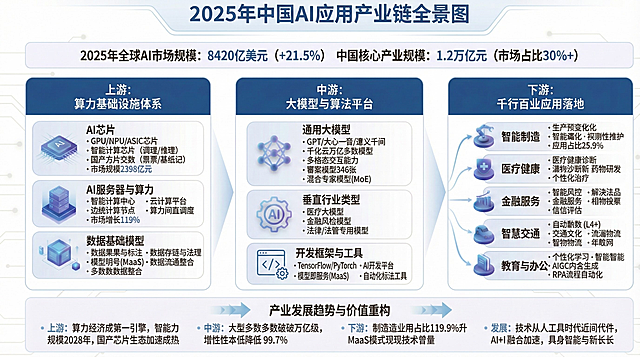
开发框架与工具 TensorFlow/PyTorch 模型即服务(MaaS) AI开发平台 自动化标注工具 根据生成一个图形
GD475693061
学术信息海报第一页,标题为"学界动向——认知神经科学与人机共生 (Human-AI Symbiosis)",副标题"探讨从'工具使用'向'智能协作'的理论转型"。整体分为三个板块: 左侧栏:宏观趋势与政策核心方向:列出"神经人因学 (Neuroergonomics):利用脑机接口(BCI)和便携式脑成像技术监控工作负荷。可解释AI (XAI) 与信任建模:研究人类如何建立对算法决策的合理信任。道德与算法偏见:探讨人因干预在算法公平性中的学术地位。",下方是关键人物:"Raja Parasuraman:神经人因学奠基人,其理论持续影响当下的自动化研究。Ben Shneiderman:倡导'以人为本的AI(HCAI)',平衡人类控制与计算机自动化。",再下方是主要政策/刊物:"IEEE Transactions on Human-Machine Systems 前沿课题。欧盟《人工智能法案》(AI Act)对人机交互安全性的最新学术指引。" 中间板块:标题"前沿研究案例",国内研究案例:"清华/浙大 脑机交互实验室 突破点:异步非侵入式BCI在残障人士辅助系统中的应用,实现高精度的意图识别。解析:将认知模型转化为控制指令,突破传统肢体交互的物理极限。",国际研究案例:"斯坦福 Human-Centered AI (HAI) 中心 研究点:'情境感知的协作机器人(Cobots)'。解析:机器人通过眼动追踪和生理电信号判断工人的疲劳状态,动态调整协作步调。" 右侧板块:标题"学术演进对比与技术矩阵",列出技术应用对比表: 维度 | 传统人因工程 | 前沿人因工程 (HFE 4.0) 交互媒介 | 物理按键/屏幕 | 脑机/语音/手势/眼动 评估手段 | 问卷/主观量表 | 实时神经反馈/生理参数 人机关系 | 操作者与工具 | 协作伙伴与共生体 保持参考图的学术信息排版风格,米黄色背景,搭配浅蓝色和浅黄色信息块,清晰图文排版,学术简洁风格,信息完整清晰。
GD427509844
AI论文生成系统概念图,基于多智能体协作架构。画面中心展示一个由多个AI智能体节点组成的网络结构,每个节点代表不同的智能体角色:研究分析智能体、文献检索智能体、写作生成智能体、审稿校对智能体、格式排版智能体。节点之间通过发光的连接线形成协作网络,数据流和信息流在节点间流动。背景为深蓝色科技感渐变,带有粒子光效和数据流动的视觉元素。画面上方有醒目的标题文字'AI论文生成系统',下方有副标题'基于多智能体协作'。整体风格科技感、未来感、专业学术氛围,蓝色和青色为主色调,高质量数字艺术,细节丰富
1q28msbdx5-HB
功能演示与问题解决PPT页面,标题“功能演示与问题解决”,功能演示流程:1.网页端上传图片 2.点击预测按钮 3.查看识别结果(类别+置信度);常见问题解决:跨域问题配置Flask跨域支持,模型加载失败检查模型路径与格式,图片尺寸不匹配前端后端统一预处理尺寸,接口异常使用Postman定位接口问题,保持科技蓝简约学术风格,和封面风格统一
GD537012908