
创意预览图

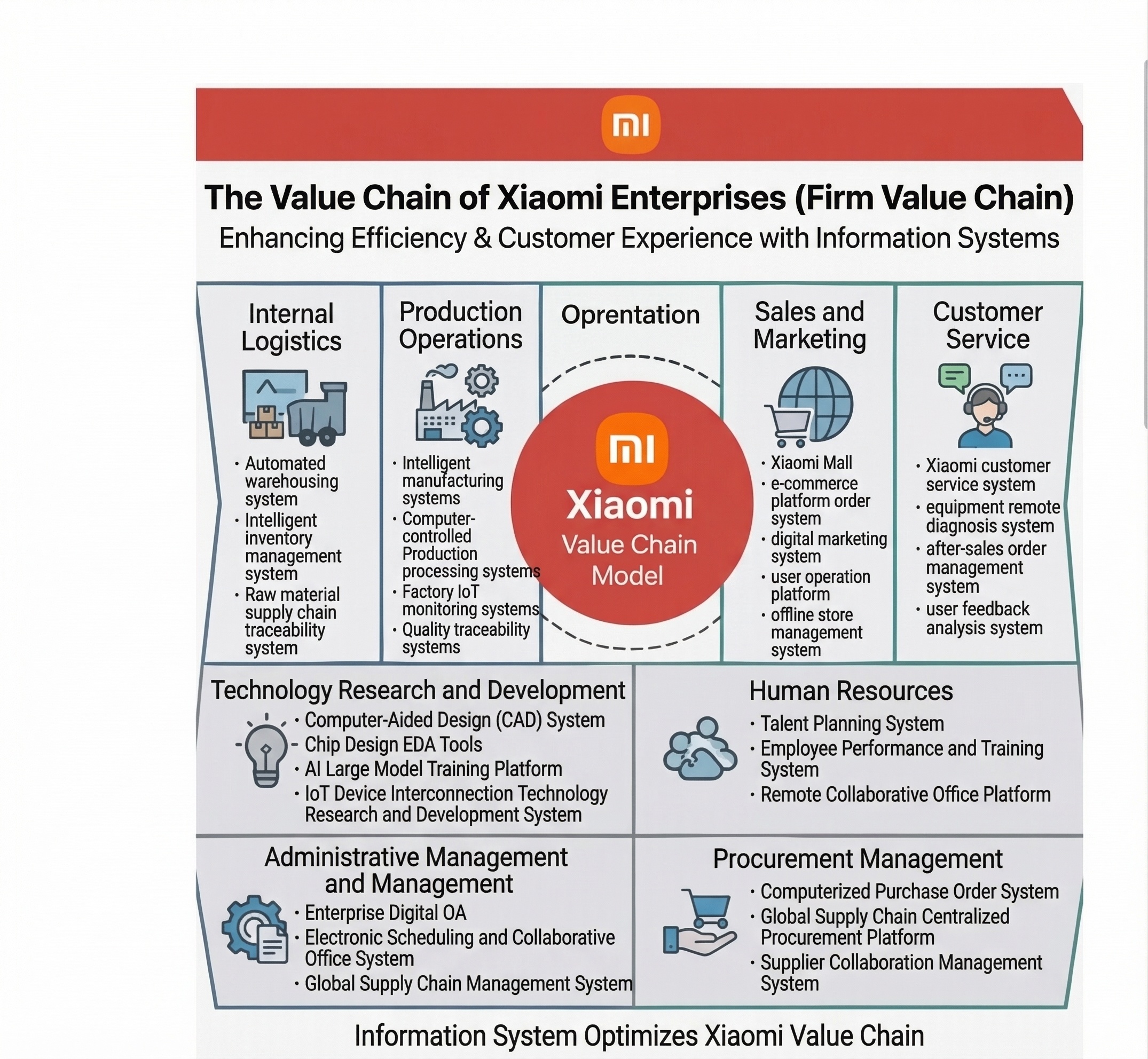
仿照原图的排版和布局风格,替换文字内容为:顶部标题栏替换为小米Logo,大标题改为'The Value Chain of Xiaomi Enterprises (Firm Value Chain)',

用户头像

1qxzrcro07x...

2026.04.09

保持这张小米波特五力分析图的整体布局、logo位置、配色和版式不变,将所有中文分析内容替换回原始完整英文内容,确保图片中没有中文,英文排版整齐清晰。完整英文内容: 1 Existing Competitors (Intra-industry Competition) Threat Level: Extremely High The competition in the smartphone, smart home, and IoT sectors is extremely fierce. Direct rivals include Huawei, OPPO, vivo, and Apple. Meanwhile, in the white goods and notebook sectors, it faces intense competition from brands such as Midea, Gree, and Lenovo. Price wars, technology battles, and ecosystem wars continue to escalate. 2 Threat of new market entrants Threat level: Medium to low The research and development, supply chain, and brand barriers for smartphones, high-end chips, and IoT ecosystems are extremely high, making it difficult for new players to break through. However, in niche segments (such as smart wearables and small household appliances), there is still a possibility for small and medium-sized brands to enter the market. 3 Threat of substitute products/services Threat level: Medium to high Feature phones, traditional household appliances, and non-smart hardware pose a substitution threat to Xiaomi's smart products. Meanwhile, tablets and 2-in-1 laptops are substitutes for entry-level mobile phones and laptops. In overseas markets, local brands will also divert users. 4 The bargaining power of suppliers Threat level: Moderate Suppliers of core components (such as chips, screens, and batteries) like Qualcomm, Samsung, and BOE have strong bargaining power. However, Xiaomi has significantly weakened the suppliers' influence through self-developed chips (Pengpai), large-scale centralized procurement, and deep binding of the supply chain. 5 The bargaining power of buyers (customers) Threat level: High There are numerous consumer choices, and they are highly sensitive to price, configuration, and ecological experience. The replacement cycle of devices has been prolonged, and users' demands for cost-effectiveness and service continue to rise, resulting in strong bargaining power.保持这张小米波特五力分析图的整体布局、logo位置、配色和版式不变,将所有中文分析内容替换回原始完整英文内容,确保图片中没有中文,英文排版整齐清晰。完整英文内容:
1 Existing Competitors (Intra-industry Competition)
Threat Level: Extremely High
The competition in the smartphone, smart home, and IoT sectors is extremely fierce. Direct rivals include Huawei, OPPO, vivo, and Apple. Meanwhile, in the white goods and notebook sectors, it faces intense competition from brands such as Midea, Gree, and Lenovo. Price wars, technology battles, and ecosystem wars continue to escalate.
2 Threat of new market entrants
Threat level: Medium to low
The research and development, supply chain, and brand barriers for smartphones, high-end chips, and IoT ecosystems are extremely high, making it difficult for new players to break through. However, in niche segments (such as smart wearables and small household appliances), there is still a possibility for small and medium-sized brands to enter the market.
3 Threat of substitute products/services
Threat level: Medium to high
Feature phones, traditional household appliances, and non-smart hardware pose a substitution threat to Xiaomi's smart products. Meanwhile, tablets and 2-in-1 laptops are substitutes for entry-level mobile phones and laptops. In overseas markets, local brands will also divert users.
4 The bargaining power of suppliers
Threat level: Moderate
Suppliers of core components (such as chips, screens, and batteries) like Qualcomm, Samsung, and BOE have strong bargaining power. However, Xiaomi has significantly weakened the suppliers' influence through self-developed chips (Pengpai), large-scale centralized procurement, and deep binding of the supply chain.
5 The bargaining power of buyers (customers)
Threat level: High
There are numerous consumer choices, and they are highly sensitive to price, configuration, and ecological experience. The replacement cycle of devices has been prolonged, and users' demands for cost-effectiveness and service continue to rise, resulting in strong bargaining power.