已添加
登录/注册
修改图片底色,将“2026年3-5月国际学术会议多学科征稿”文…
修改图片底色,将“2026年3-5月国际学术会议多学科征稿”文字调大,修改“会议推荐”四个字的外观形状,保持所有出版社图标不变
1q0gqvr47p1...
2026.03.12
做同款
白色背景的学术征稿宣传图,左上角有蓝色圆形标识,标识内文字是"会议推荐",图片上方居中位置有文字"2026年3-5月国际学术会议多学科征稿",画面中间包含IEEE、ICPS(标注Published by ACM)、JOURNAL OF PHYSICS: CONFERENCE SERIES、Compendex on Engineering Village、Scopus的品牌标识,整体风格正式简洁,适合学术宣传使用
1q0gqvr47p1glcuae-HB
保留原图中所有出版社(IEEE、ICPS、JOURNAL OF PHYSICS: CONFERENCE SERIES、Compendex on Engineering Village、Scopus)的标识样式、位置完全不变,仅将上方标题文字修改为"2026年3-5月国际学术会议多学科征稿",左上角文字保持"会议推荐"不变
1q0gqvr47p1glcuae-HB
根据原图重新生成,保留所有文字内容不变,文字是:中心搜索框写着"SCI/EI期刊",环形放射布局依次为专家预审、SCI/EI期刊、EI会议论文集、翻译润色、论文查重、论文排版、检索查询、引用查询、IF及分区查询、硕博招聘、国际会议、知网期刊;优化视觉效果,让排版更清晰美观,深蓝色科技感背景,精致干净的商务信息图
创意 × 1
用户HOqY1MT5
去除水印改变图片中的排版和颜色但是内容保持不变
1q7qnl6fdt2o410ae-HB
参考图版式复刻,保留深绿色学术风格的QS世界大学学科排名表格海报,横版构图。顶部深绿色横幅,左侧大标题"QS世界大学学科排名 2026",右上角英文小字"Global Recognition / World Impact"配金色装饰线。下方为三列表格,表头浅米色背景,三列分别为"学科/领域"、"亚洲排名"、"世界排名"。表格共7行数据,行内容依次为:1.社会科学与管理(学院整体)/第5/第22;2.地理/第2/第11;3.社会学/第3/第24;4.心理学/第3/第35;5.社会政策与行政/第5/第32;6.政治学/第8/第53;7.传播与媒体研究/第11/51-100。排名数字使用金色加粗字体,学科名称为深绿色。表格整体白色背景,圆角卡片设计,四周有深绿色外边框。背景顶部隐约有校园建筑和绿植剪影装饰。整体风格正式、学术、高端,排版精美,文字清晰可读。画面中所有表格单元格内容填充完整,无空白占位。画面中所有数字必须精确渲染,不得错位、遗漏或编造。
青禾40489
严格按照以下文字内容逐一精准修正,保证每个英文字母和汉字都完全正确,不得出现乱码、错字、字体错误: 1. 哈佛大学:排名文字准确为 "2027 USNEWS世界大学排名:1",背景成绩准确为 "背景成绩:海本/认知科学本科/均分3.9+" 2. 耶鲁大学:排名准确为 "2027 USNEWS世界大学排名:8",录取专业"统计学硕士",背景成绩"海本/统计学/均分3.9+" 3. 斯坦福大学:排名准确为 "2027 USNEWS世界大学排名:3",录取专业"土木工程" 4. 杜克大学:排名准确为 "2027 USNEWS世界大学排名:16" 5. 芝加哥大学:排名准确为 "2027 USNEWS世界大学排名:25" 6. 修正院校名称为正确的"宾夕法尼亚大学",排名准确为 "2027 USNEWS世界大学排名:17" 7. 康奈尔大学:排名准确为 "2027 USNEWS世界大学排名:13" 8. 加州大学伯克利:排名准确为 "2027 USNEWS世界大学排名:7" 9. 哥伦比亚大学:排名准确为 "2027 USNEWS世界大学排名:10" 10.帝国理工大学:排名准确为 "2027 QS世界大学排名:2",修正"滑铁卢大学"字体 11.伦敦政治经济学院:排名准确为 "2027 QS世界大学排名:62" 12.伦敦大学学院:排名准确为 "2027 QS世界大学排名:8",录取专业准确为 "先进材料数字化制造力学硕士",修正所有错误字体 所有美国院校使用"USNEWS世界大学排名",所有非美国院校统一使用"QS世界大学排名",所有英文单词必须完整正确,不得拆分、乱码,所有文字字体保持统一清晰,保持原有排版布局和配色风格不变
Paul Shan
将这张学术会议海报的顶部大标题区域替换为ICGBC 2026第一届粒球计算国际会议的标题,其余所有内容、版式、配色、布局、图表、文字完全保持不变。 具体修改顶部横幅区域: 1. 顶部蓝青渐变横幅保留,左侧两个Logo(菱形GC标+圆形2024标)替换为ICGBC风格的Logo占位 2. 顶部主大标题改为:"ICGBC 2026 第一届粒球计算国际会议" 3. 主标题上方英文小字:"2026 International Conference of Granular-Ball Computing" 4. 原论文编号行改为:左侧"2026年10月16-18日 | 中国·重庆",右侧"主办单位:重庆邮电大学" 5. 横幅下方的论文标题、作者、单位,以及所有6个板块的内容、表格、示意图、实验流程、底部联系方式和二维码占位,全部原样保留不变 6. 整体配色仍为蓝青科技风,保持原海报的视觉风格 7. 所有数字精确不变,所有文字内容除顶部标题区外完全不变
墨白44423
删除圆形金色边框内的人物,将圆形区域内填充为与原图一致的灰色背景,保持圆形金色边框、光效、蓝色科技背景、所有文字和logo完全不变
1q5f6f8kur-HB
参考这张图片的排版布局,替换内容生成新学术海报:标题为"学界动向——认知神经科学与人机共生 (Human-AI Symbiosis)",副标题"探讨从'工具使用'向'智能协作'的理论转型"。整体分多栏排版: 左侧栏:宏观趋势与政策核心方向:列出神经人因学、可解释AI与信任建模、道德与算法偏见,下方列关键人物Raja Parasuraman和Ben Shneiderman,再下方列主要政策刊物IEEE期刊和欧盟AI法案; 中间板块:前沿研究案例,分为清华/浙大脑机交互实验室国内案例和斯坦福HAI中心国际案例,各带研究点和解析; 右侧板块:学术演进对比,列出维度、传统人因工程、前沿人因工程HFE 4.0的对比表格。 保持参考图的分色块排版风格,使用浅彩色区块区分不同板块,清晰图文布局,文字完整清晰,学术简洁风格,保持原图比例。
GD427509844
文字内容都不变,画面要亮白色,不要暗黑色,不要底下的人物
1q0a4472nk-HB
学术信息海报第一页,标题为"学界动向——认知神经科学与人机共生 (Human-AI Symbiosis)",副标题"探讨从'工具使用'向'智能协作'的理论转型"。整体分为三个板块: 左侧栏:宏观趋势与政策核心方向:列出"神经人因学 (Neuroergonomics):利用脑机接口(BCI)和便携式脑成像技术监控工作负荷。可解释AI (XAI) 与信任建模:研究人类如何建立对算法决策的合理信任。道德与算法偏见:探讨人因干预在算法公平性中的学术地位。",下方是关键人物:"Raja Parasuraman:神经人因学奠基人,其理论持续影响当下的自动化研究。Ben Shneiderman:倡导'以人为本的AI(HCAI)',平衡人类控制与计算机自动化。",再下方是主要政策/刊物:"IEEE Transactions on Human-Machine Systems 前沿课题。欧盟《人工智能法案》(AI Act)对人机交互安全性的最新学术指引。" 中间板块:标题"前沿研究案例",国内研究案例:"清华/浙大 脑机交互实验室 突破点:异步非侵入式BCI在残障人士辅助系统中的应用,实现高精度的意图识别。解析:将认知模型转化为控制指令,突破传统肢体交互的物理极限。",国际研究案例:"斯坦福 Human-Centered AI (HAI) 中心 研究点:'情境感知的协作机器人(Cobots)'。解析:机器人通过眼动追踪和生理电信号判断工人的疲劳状态,动态调整协作步调。" 右侧板块:标题"学术演进对比与技术矩阵",列出技术应用对比表: 维度 | 传统人因工程 | 前沿人因工程 (HFE 4.0) 交互媒介 | 物理按键/屏幕 | 脑机/语音/手势/眼动 评估手段 | 问卷/主观量表 | 实时神经反馈/生理参数 人机关系 | 操作者与工具 | 协作伙伴与共生体 保持参考图的学术信息排版风格,米黄色背景,搭配浅蓝色和浅黄色信息块,清晰图文排版,学术简洁风格,信息完整清晰。
GD427509844
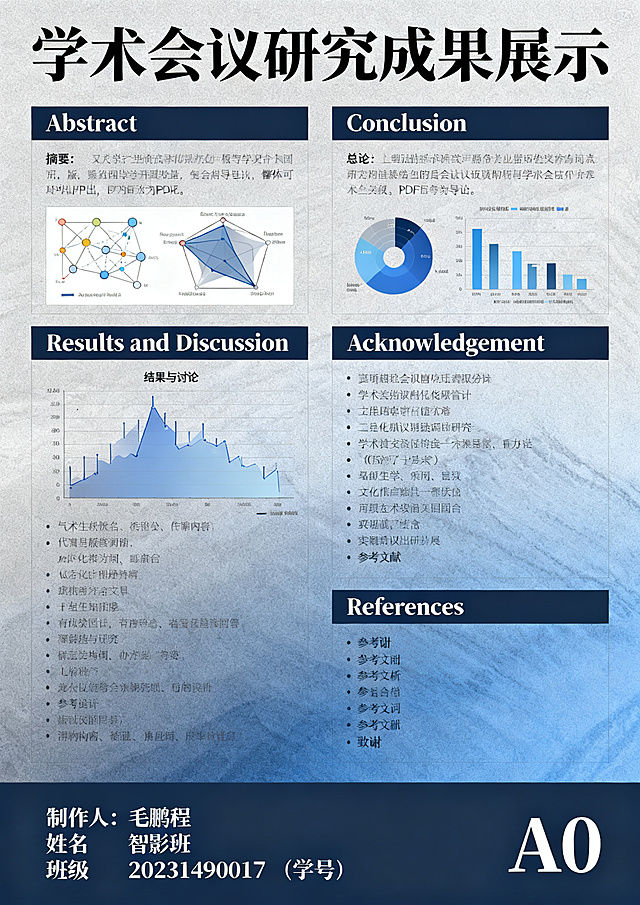
学术会议海报制作要求 内容:各专业领域SCI或会议论文(必须包括Abstract, Results and Discussion, Conclusion, Acknowledgement and References五部分,其他部分如Introduction、Experimental Section等可酌情增删),多图少字 语言:英文 尺寸:A0(841mm×1189mm) 格式:PDF(可由PowerPoint、Adobe Illustrator等软件导出) 海报合适位置标注制作人姓名毛鹏程、班级智影班,学号 20231490017需包含设计元素(文字、配色、版式构图等),拒绝纯色背景海报
GD748298749
将图中所有的“鹏博士”文字替换为“智子星”,将第二行的“科学项目”文字替换为“鹏博士科学项目”,保持原有字体、字号、颜色、排版布局和所有其他内容完全不变
1q03qke8ly-HB
基于基础海报[image1],保持原蓝白科技学术风格,按照以下要求修改: 1. 在RESEARCH BACKGROUND板块之前新增一个板块,标题为"Abstract",完整添加以下内容: To address two core issues in sliding mode current control for permanent magnet synchronous motors—first, that sliding mode chattering limits control accuracy, and second, the inherent trade-off between chattering suppression and disturbance rejection—this paper proposes a second-order terminal sliding mode control scheme based on a super-twisting reaching law. In the design of the sliding surface, a first-order integral fast terminal sliding surface is embedded into a second-order nonsingular terminal sliding surface structure. This combined design retains the chattering suppression advantage of the former while achieving the fast convergence characteristic of the latter when the system state is near the equilibrium point, and it avoids the singularity problem. In the design of the reaching law, the super-twisting sliding mode algorithm is introduced to further mitigate chattering and achieve fast convergence of the currents with steady-state-error-free tracking. Finally, simulation verification is conducted and compared with conventional control methods. The results demonstrate that the proposed scheme offers significant advantages in improving current dynamic response, suppressing chattering, and enhancing disturbance rejection capability. 2. 新增一个板块标题为"Core Method Framework",完整添加以下内容(全部英文): ■ Proposed Control Scheme: STA + STSMC ▎Sliding Surface Design — Second-Order Non-Singular Terminal Sliding Mode Surface Embed the first-order integral fast terminal sliding surface into the second-order non-singular terminal sliding surface structure: First-order sliding variable: s_{1d} = e_d + \int (c_{ed} \cdot e_d + c_{td} \cdot e_d^{\alpha/\beta}) d\tau Second-order sliding variable: s_{2d} = s_{1d} + c_{nd} \cdot (\dot{s}_{1d})^{m/n} Where: • e_d = i_d^* - i_d is the d-axis current tracking error • α, β are positive odd numbers, satisfying α < β • m, n are positive odd numbers, satisfying 1 < m/n < 2 • c_{ed}, c_{td}, c_{nd} are positive coefficients Design Features: ✓ Retains the chattering suppression advantage of the first-order integral fast sliding mode ✓ Has the fast convergence characteristic of the second-order non-singular terminal sliding mode near the equilibrium point ✓ Avoids the singularity problem ▎Reaching Law Design — Super-Twisting Algorithm (STA) Super-twisting sliding mode reaching law expression: \dot{s} = -p \cdot |s|^{1/2} \cdot \text{sign}(s) + y \dot{y} = -i \cdot \int \text{sign}(s) dt Nonlinear control term: u_{sw} = L_0 \cdot [ p \cdot |s|^{1/2} \cdot \text{sign}(s) + \int i \cdot \text{sign}(s) dt ] Design Advantages: ✓ Introduces the sign function into the integral term of the control voltage, which is beneficial to chattering suppression ✓ Ensures fast convergence of sliding variables in finite time ✓ Achieves zero-static-error current tracking 3. 保持画面比例为16:9横版学术海报,调整整体布局保证协调。 4. 新增一个板块标题为"Simulation Verification Results",完整添加以下内容,并将提供的两张对比曲线图[image2]和[image3]并排嵌入此板块,图片整体缩小,两张图片总面积不超过整个海报面积的1/10,保持图片清晰: Simulation Verification and Comparative Analysis Experimental Conditions: • Motor speed: 3000 r/min • d-axis reference current: i_d^* = -50 A (constant) • q-axis reference current: i_q^* steps from 20A to 87A at t=0.02s • Comparison target: conventional exponential reaching law SFTSMC vs. the proposed STA+STSMC Main Conclusions: • The proposed scheme reduces the control voltage chattering amplitude to less than 1/3 of the conventional scheme at rated speed • Effectively solves the problems of low steady-state accuracy and large current fluctuation caused by large chattering in traditional sliding mode current control • Ensures that the motor current state can track the reference signal in finite time 保持原海报的所有已有内容不变,保持原蓝白渐变科技风格一致,保持所有文字为英文,字号协调,公式清晰渲染,所有二维码区域使用纯色方块占位符呈现,方块中央标注"QR Code Placeholder"文字,严禁生成任何可识别的二维码图案,所有文字必须精确渲染,排版整齐美观。
创意 × 2
1r998zirfkPItvzg-HB
横版公众号头条封面海报,简约高端学术商务风格,扁平化轻奢质感,柔和渐变天蓝色流线波纹背景,色调干净素雅,线条细腻,大气稳重。 顶部居中大标题:"溯研堂学术指导",字体稳重大气。 标题下方一行小字品牌标语:"追溯学术本源,深耕科研指导"。 主体区域分为上下两行,每行3个白色圆角方框,一共6个板块,每个板块搭配简约细线条学术图标,图标在方框上方居中,文字在图标下方居中: 第1行(从左到右): 1. "北大核心 / 南大核心指导",搭配期刊书本细线条图标 2. "SCI/SSCI 指导",搭配外文文献细线条图标 3. "本硕博学位论文指导",搭配学位帽细线条图标 第2行(从左到右): 4. "课题申报书指导",搭配文档申报表细线条图标 5. "博士申请指导",搭配升学箭头细线条图标 6. "保研考研指导",搭配笔试答卷细线条图标 画面底部居中偏下位置,整体水平居中布局:左侧是小型方形二维码占位区域,右侧紧邻二维码的是两行文字——第一行"名校导师,全程陪伴",第二行"扫码添加顾问咨询详情"。二维码和文字作为一个整体在画面底部居中对齐,二维码在左、文字在右,两者紧挨。二维码区域不要过大。 整体排版疏密均衡,白色圆角方框有轻微阴影增加层次感,天蓝色渐变背景有柔和流线波纹装饰,文字清晰易读,学术感强,适合学术科研机构品牌宣传。版式精美。 画面中所有二维码区域使用纯色方块占位符呈现,方块中央标注"二维码占位"文字,严禁生成任何可识别的二维码图案。 画面中所有信息区域、套餐卡片、价格表格、权益列表、对比模块、福利条目、课程大纲、议程、嘉宾介绍区等必须填充完整合理的内容,不得出现空白框、空白占位、横线待填写区域、空列表项、空单元格;用户未提供具体内容时,基于海报主题和场景合理补全典型内容,确保是完整可用的成品海报而非待填写模板。 画面中所有数字必须精确渲染,不得错位、遗漏或编造。
GD439944344
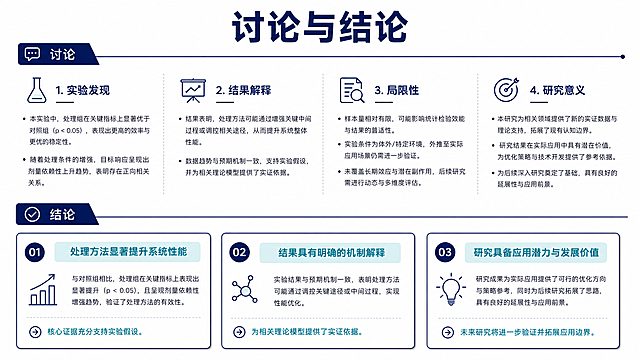
实验PPT讨论与结论页,学术简约风,藏蓝色粗体标题写"讨论与结论",上下分栏,上半部分写讨论总结实验发现,下半部分用卡片突出显示3条核心结论,配色藏蓝白,关键结论用淡青色突出,排版整洁,留白充足,专业严谨
宝月巴
实验PPT讨论与结论页,学术简约风,藏蓝色粗体标题写"讨论与结论",上下分栏,上半部分写讨论总结实验发现,下半部分用卡片突出显示3条核心结论,配色藏蓝白,关键结论用淡青色突出,排版整洁,留白充足,专业严谨
宝月巴
实验PPT讨论与结论页,学术简约风,藏蓝色粗体标题写"讨论与结论",上下分栏,上半部分写讨论总结实验发现,下半部分用卡片突出显示3条核心结论,配色藏蓝白,关键结论用淡青色突出,排版整洁,留白充足,专业严谨
宝月巴
复刻参考图片的内容和排版,制作一模一样的NPC 2026会议征稿海报,包含所有文字信息:标题NPC 2026 The 22nd IFIP International Conference on Network and Parallel Computing,时间地点November 28-29, Bali, Indonesia,Call for Papers,保留Steering Committee、Organizing Committee、Important Dates、Topics of interest、Submission Guidelines等所有板块文字内容,背景保留巴厘岛水景建筑的风景图,右下角保留ifiplogo
1q2ra2mwkntkrhro-HB
在原图基础上做两处修改,其余所有内容完全保持不变: 修改一:删除知识图谱、问题图谱、能力图谱、思政图谱四个卡片中的所有装饰性图标,只保留文字内容(主标题+副标题小字),卡片的色块、边框、布局保持不变。 修改二:将顶部标题区的蓝色色块(深蓝色顶部条)的高度调小,使其更加纤细紧凑,标题文字大小保持不变或适当缩小以适应新的条高。 其余所有内容(四个能力色块、三层联动矩阵、底部知识图谱驱动区、进阶路径箭头等)完全保持不变,位置、颜色、文字、大小均不作任何修改。
GD197169012
参考上传图片的排版结构,生成扁平化科技海报,上方清晰写出文字"一文读懂什么是超节点",内容介绍AI算力领域中超节点,超节点是近内存计算和超高速互联为核心,融合计算存储网络的极致密度算力集群,包含物理形态单个机柜级系统、小规模集群级系统,以及统一内存寻址、超低延迟互联、强耦合三个核心特征,采用极简现代感科技配色,高端商务科技风,矢量扁平化插画
67rn073cr2jdcofn-HB
参考原海报版式生成竖版9:16信息海报,顶栏保留"QS WORLD UNIVERSITY RANKINGS 2027"标识和手绘报告装饰,主标题为"2027QS世界大学排名美国Top100",主体为表格展示26所大学排名,表格分三列:排名、学校中文名称、学校英文名称,完整展示以下排名信息: 1 麻省理工学院 MIT =2 斯坦福大学 Stanford 5 哈佛大学 Harvard 7 加州理工学院 Caltech 15 宾夕法尼亚大学 UPenn =16 康奈尔大学 Cornell =16 耶鲁大学 Yale =20 约翰斯・霍普金斯大学 JHU =20 加州大学伯克利分校 UC Berkeley 24 芝加哥大学 UChicago 27 普林斯顿大学 Princeton 43 哥伦比亚大学 Columbia 45 西北大学 Northwestern 49 加州大学洛杉矶分校 UCLA 51 密歇根大学安娜堡分校 UMich 55 卡内基梅隆大学 CMU 58 纽约大学 NYU 66 布朗大学 Brown 70 杜克大学 Duke 72 德克萨斯大学奥斯汀分校 UT Austin 74 伊利诺伊大学香槟分校 UIUC 81 加州大学圣地亚哥分校 UCSD =92 宾夕法尼亚州立大学 Penn State =92 华盛顿大学西雅图 UW Seattle 94 波士顿大学 BU 配色采用黄白橙色系,和参考图一致,简约商务风格,文字清晰可读,版式精美,信息分区清晰,底部保留公众号标注,4K分辨率
1pzgdewb0w-HB
保持原图的整体设计风格和排版布局,橙色虚线边框白色背景,小红书风格信息图。替换所有文字内容为以下新文案,保持原图的图标风格、字体风格、配色方案和整体视觉节奏: 顶部大标题:人文社科申博中介怎么选?2026测评避坑指南 第一梯队标题(红色):第一梯队 | 双核心标杆:强服务体验+强申请结果 第一梯队正文: 优越留学代表,17年人文社科高端PhD服务经验,独立博士事业部人文社科专项小组 核心优势: 签约顾问全部硕博学历,9年以上人文社科顶校申博经验 3000+海外博士师资库覆盖哲学、人文地理、传播学、教育技术等120余细分方向 服务体系:顶校学术深度脑暴+高端博士定制冲刺规划+高阶学术精细化落地+四层高端质控兜底 脑暴环节深挖课程论文、田野调研、会议论文,提炼真实研究缺口 高阶业务:人文社科RP定制、中文核心/会议论文润色、教授套磁、CSC与院校奖学金攻关、学术面试特训 落地保障:RP的AI原创检测、关键沟通录屏留痕、履约台账、2小时极速前置沟通兜底 录取成果:人文社科案例600+,英国港新各1000+,北美600+博士录取,业内称"世界名校博士全奖收割机" 第二梯队标题(红色):第二梯队 | 学术深耕:强学术深耕+强定制落地 第二梯队正文: 致学博教育为代表,人文方向博士Tutor参与学术共创 核心优势: 专门解决RP选题过宽没有边界的高频痛点 多轮讨论收敛研究对象、变量、研究范围,梳理文献脉络,拒绝模板化文书 适合人群:理论基础扎实的人文社科申请者 第三梯队标题(红色):第三梯队 | 美国资源+差异化规划 第三梯队正文: 致美U+留学为代表,高端综合机构 核心优势: 熟悉英美人文社科名校评审偏好,海归硕博团队重构学术叙事 适配美国委员会制人文PhD申请 适合人群:背景拔尖冲刺G5、藤校人文项目 底部提示:人文社科申博双向闭环管控,签约前索要RP批注修改轨迹,警惕流水线产出
GD301244481
小红书笔记信息长图,竖版3:4比例,深蓝与白色学术风格,版式更简洁,内容精简,去掉学员真实评价板块和底部申请要求栏,只保留三大核心板块。顶部标题区:左上角MASTER SCHOLAR盾形校徽logo,主标题超大粗黑体「哥大巴纳德科研夏校」,副标题小字「常春藤盟校资源 · 纽约曼哈顿学术体验」,右上角配巴纳德学院建筑照片圆角小图。第一板块「顶尖学术背书」:三个深蓝色圆形图标横向排列,分别是教授帽、趋势图、证书图标,下方对应文字——哥大巴纳德教授亲授、大学级科研全流程、学术履历沉淀,每句配一行小字说明。第二板块「四大探索方向」:采用2x2网格布局,四个圆角卡片,深蓝图标+标题——心理与行为科学、经济与全球议题、商业与创新实践、计算机与生命科学,卡片有浅蓝底色。第三板块「口碑与录取」:左侧深蓝色竖条标题「100%好评」,右侧三个大数字——100%满意度、100%超预期、66.7%强烈推荐,数字用深蓝色大号字体,下方小字说明;底部一行小字列出代表名校:布朗/伯克利/卡耐基梅隆/韦尔斯利等。整体无二维码,无学员照片,无大段评价文字,排版更疏朗透气,留白充足,深蓝(#0F2B5B)+白色+浅灰蓝点缀,学术感高级,文字清晰,四周留安全边距。
1qinnwnxcgieo81A-HB
基于参考图进行修改,让画面更丰富不简洁:保持浅蓝色系主色调和全部文字内容、时间轴结构不变。增加以下丰富元素:1)每个阶段节点配一个对应主题的简约线稿图标(如写作方案配钢笔/文档图标、文献基础配书籍/放大镜图标、范文拆解配拆分文档图标、实证分析配数据图表图标、润色投稿配羽毛笔/信封图标、返修见刊配奖章/证书图标);2)时间轴线条增加渐变效果,节点圆圈增加发光或立体阴影;3)背景增加淡蓝色几何装饰元素,如细网格、淡色圆点、学术感线条、书页剪影、数据曲线淡影等;4)每个阶段的标题文字增加浅蓝色底色块或标签样式,增强区块感;5)顶部主标题区域增加装饰线条或学术感图形(如毕业帽、钢笔尖、DNA双螺旋等科研元素淡影);6)整体增加层次感和细节,让画面饱满充实但不杂乱,保持专业学术风格。版式结构、所有文字内容、各阶段位置与顺序完全保持不变。画面中所有文字必须与参考图完全一致,不得改写、简化或编造。画面中所有数字必须精确渲染,不得错位、遗漏或编造。
林深59926















![基于基础海报[image1],保持原蓝白科技学术风格,按照以下要求修改:
1. 在RESEARCH BACKGROUND板块之前新增一个板块,标题为"Abstract",完整添加以下内容:
To address two core issues in sliding mode current control for permanent magnet synchronous motors—first, that sliding mode chattering limits control accuracy, and second, the inherent trade-off between chattering suppression and disturbance rejection—this paper proposes a second-order terminal sliding mode control scheme based on a super-twisting reaching law.
In the design of the sliding surface, a first-order integral fast terminal sliding surface is embedded into a second-order nonsingular terminal sliding surface structure. This combined design retains the chattering suppression advantage of the former while achieving the fast convergence characteristic of the latter when the system state is near the equilibrium point, and it avoids the singularity problem.
In the design of the reaching law, the super-twisting sliding mode algorithm is introduced to further mitigate chattering and achieve fast convergence of the currents with steady-state-error-free tracking.
Finally, simulation verification is conducted and compared with conventional control methods. The results demonstrate that the proposed scheme offers significant advantages in improving current dynamic response, suppressing chattering, and enhancing disturbance rejection capability.
2. 新增一个板块标题为"Core Method Framework",完整添加以下内容(全部英文):
■ Proposed Control Scheme: STA + STSMC
▎Sliding Surface Design — Second-Order Non-Singular Terminal Sliding Mode Surface
Embed the first-order integral fast terminal sliding surface into the second-order non-singular terminal sliding surface structure:
First-order sliding variable: s_{1d} = e_d + \int (c_{ed} \cdot e_d + c_{td} \cdot e_d^{\alpha/\beta}) d\tau
Second-order sliding variable: s_{2d} = s_{1d} + c_{nd} \cdot (\dot{s}_{1d})^{m/n}
Where:
• e_d = i_d^* - i_d is the d-axis current tracking error
• α, β are positive odd numbers, satisfying α < β
• m, n are positive odd numbers, satisfying 1 < m/n < 2
• c_{ed}, c_{td}, c_{nd} are positive coefficients
Design Features:
✓ Retains the chattering suppression advantage of the first-order integral fast sliding mode
✓ Has the fast convergence characteristic of the second-order non-singular terminal sliding mode near the equilibrium point
✓ Avoids the singularity problem
▎Reaching Law Design — Super-Twisting Algorithm (STA)
Super-twisting sliding mode reaching law expression:
\dot{s} = -p \cdot |s|^{1/2} \cdot \text{sign}(s) + y
\dot{y} = -i \cdot \int \text{sign}(s) dt
Nonlinear control term:
u_{sw} = L_0 \cdot [ p \cdot |s|^{1/2} \cdot \text{sign}(s) + \int i \cdot \text{sign}(s) dt ]
Design Advantages:
✓ Introduces the sign function into the integral term of the control voltage, which is beneficial to chattering suppression
✓ Ensures fast convergence of sliding variables in finite time
✓ Achieves zero-static-error current tracking
3. 保持画面比例为16:9横版学术海报,调整整体布局保证协调。
4. 新增一个板块标题为"Simulation Verification Results",完整添加以下内容,并将提供的两张对比曲线图[image2]和[image3]并排嵌入此板块,图片整体缩小,两张图片总面积不超过整个海报面积的1/10,保持图片清晰:
Simulation Verification and Comparative Analysis
Experimental Conditions:
• Motor speed: 3000 r/min
• d-axis reference current: i_d^* = -50 A (constant)
• q-axis reference current: i_q^* steps from 20A to 87A at t=0.02s
• Comparison target: conventional exponential reaching law SFTSMC vs. the proposed STA+STSMC
Main Conclusions:
• The proposed scheme reduces the control voltage chattering amplitude to less than 1/3 of the conventional scheme at rated speed
• Effectively solves the problems of low steady-state accuracy and large current fluctuation caused by large chattering in traditional sliding mode current control
• Ensures that the motor current state can track the reference signal in finite time
保持原海报的所有已有内容不变,保持原蓝白渐变科技风格一致,保持所有文字为英文,字号协调,公式清晰渲染,所有二维码区域使用纯色方块占位符呈现,方块中央标注"QR Code Placeholder"文字,严禁生成任何可识别的二维码图案,所有文字必须精确渲染,排版整齐美观。](https://gd-cms.dancf.com/gd-cms/xi19e5/0/10cb03da-a2c3-4c05-9cc6-7acc0a18b1d116842.jpeg?x-oss-process=image/resize,w_640,type_6/sharpen,120/interlace,1)